
Mexico national soccer team jersey history: Where Aztec spirit meets football identity
For the people of Mexico, the national team jersey is far more than a standard piece of sports equipment; it is a sacred garment that carries the weight of a civilization's history onto the field. A thorough review of the Mexico national soccer team jersey history on Livesports088 highlights a tradition of design that is arguably the most expressive in the world of football. While many European nations favor conservative and minimalist aesthetics, Mexico has consistently leaned into the bold, the colorful, and the symbolic.
From the early adoption of the national colors to the legendary integration of Aztec sun stones and feathered serpents, every kit release is an event that celebrates "Mexicanidad." This journey through the decades showcases a team that views the football pitch as a stage for national storytelling, evolving through various manufacturing partnerships to find a perfect balance between ancestral pride and cutting edge sportswear technology.
Mexico national soccer team jersey history
A kaleidoscope of culture and sponsorship evolution
The visual identity of El Tri is defined by a primary palette of green, white, and red, though the path to this "Tricolor" look was unconventional. In the earliest days of the 1930s, Mexico actually competed in maroon and navy blue, only making the permanent switch to green in the late 1950s to better reflect the national flag. This transition sparked a cultural movement, turning the "Green Wave" into a formidable presence in global stadiums.
The team's sponsorship history is equally diverse, featuring Adidas version in 1986 World Cup on home soil, a significant era with Umbro in the early 90s followed by a transformative local partnership with ABA Sport. Interestingly, Nike did not enter the picture until 2003, providing the kits for the 2006 World Cup cycle and introducing a sleek, performance oriented style before Adidas reclaimed the partnership in 2007 to begin their long standing and culturally focused current tenure.
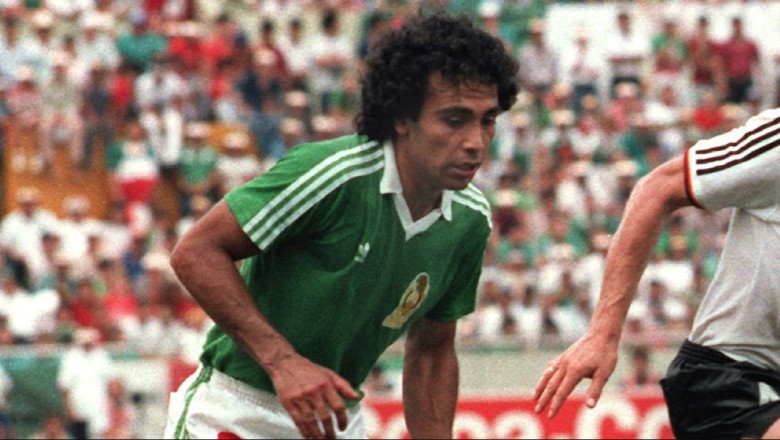
1986: The classic host aesthetic (1986 World Cup)
Hosting the World Cup for the second time in 1986 required a kit that exuded confidence and class. Adidas delivered a design that remains the gold standard for vintage simplicity, featuring a vibrant green shirt with a crisp white V-neck collar and the iconic three stripes running down the sleeves. This uniform was the armor of a legendary generation led by Hugo Sánchez, who dazzled home crowds under the bright Mexican sun.
The 1986 jersey is celebrated today for its clean lines and breathable shadow stripe fabric, representing an era where the Mexican national team officially arrived as a sophisticated powerhouse in international football.
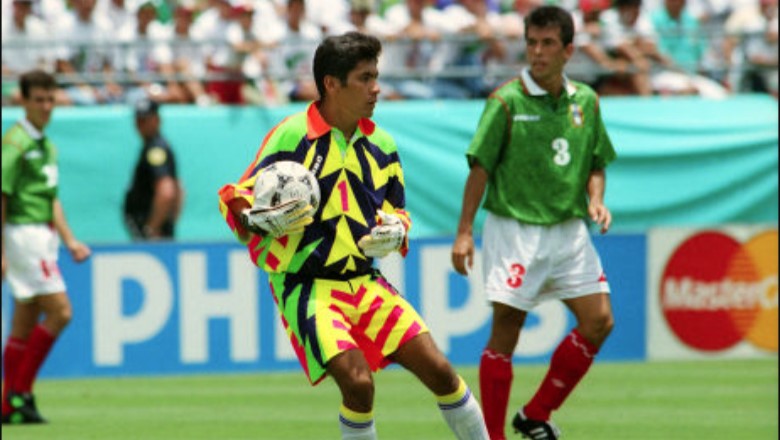
1994: Umbro era and Jorge Campos phenomenon (1994 World Cup)
The 1994 World Cup in the United States saw Mexico wearing a unique Umbro design that featured a subtle, all over pattern of fractured federation crests. However, the true stylistic revolution of this tournament came from the goalkeeper, Jorge Campos. Rejecting the standard Umbro templates, Campos collaborated on his own line of jerseys that featured explosive neon geometric patterns in pink, lime green, and bright yellow.
These oversized, multi colored shirts were inspired by the surf and sun of his hometown, Acapulco. Campos became a global sensation not just for his incredible agility but for his role as a fashion icon who broke every traditional rule of the goalkeeper's union.
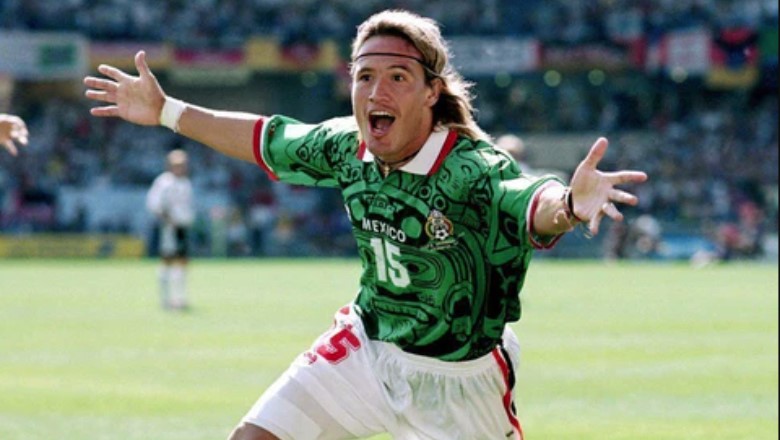
1998: The Aztec Sun Stone masterpiece (1998 World Cup)
In 1998, the Mexican brand ABA Sport created what is widely considered the most iconic football jersey in history. The design featured a massive, intricate watermark of the Aztec Sun Stone covering the entire front of the green fabric.
By placing the "Piedra del Sol" at the center of the kit, Mexico transformed a piece of athletic gear into a legendary cultural artifact. Worn by stars like Cuauhtémoc Blanco in France, this jersey remains the definitive example of how a nation can use its ancient history to create a modern visual identity that captures the imagination of fans worldwide.
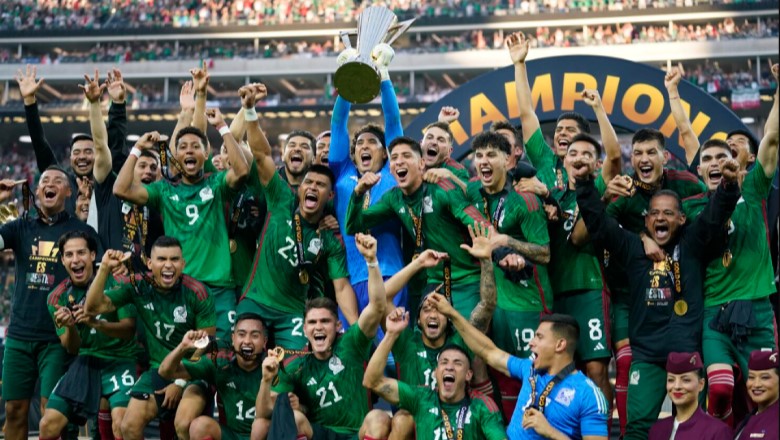
2018: A digital homage to the nineties (2018 World Cup)
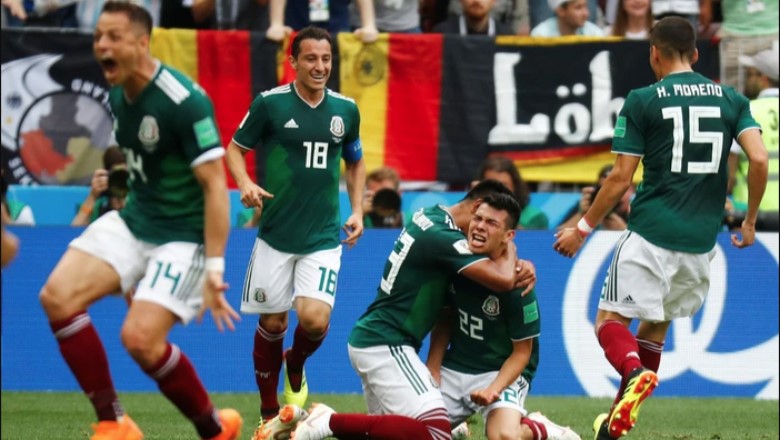
After a decade of more traditional designs, Adidas returned to a retro-inspired look for the 2018 tournament in Russia. The jersey utilized a deep "collegiate green" and featured light green graphic panels on the sides, which were a direct nod to the geometric templates used during the 1994 World Cup. This "Digital Retro" approach was both a commercial success and a lucky charm on the pitch.
Mexico wore this kit during their historic 1-0 upset victory over defending champions Germany, ensuring that this specific design would forever be associated with one of the greatest moments in the team's modern history.
2026: The Quetzalcoatl era (2026 World Cup)
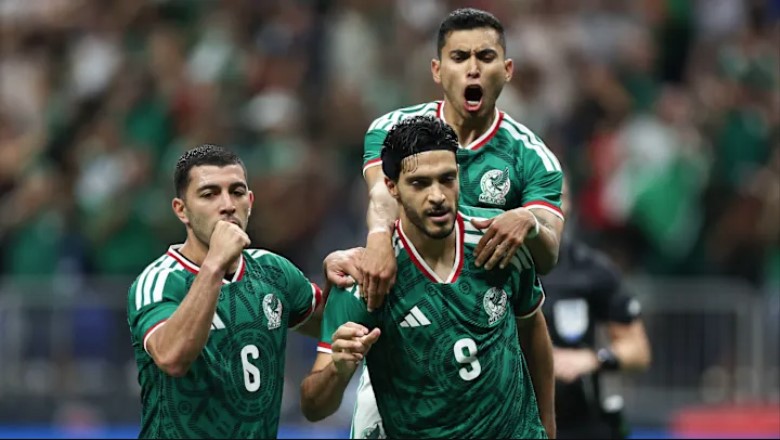
Looking forward to co-hosting the 2026 World Cup, the latest design is a breathtaking tribute to the feathered serpent deity, Quetzalcoatl. The kit features a complex pattern of feathers interwoven across the chest, symbolizing ancient wisdom and the spirit of the Mexican people.
This jersey is crafted from advanced, breathable recycled materials to handle the diverse climates of North America. As the team prepares for 2026, this design represents a full-circle return to the indigenous themes that have made Mexican football fashion a subject of global fascination for over a century.
The narrative behind the Mexico national soccer team jersey history is one of unwavering cultural pride. By tracking the various designs through the years , it becomes clear that El Tri does not just play for a win; they play to represent a civilization.
These kits are vibrant bridges between the ancient past and the modern game, proving that football is as much about identity as it is about the scoreline. As the 2026 tournament approaches, the world eagerly anticipates the next chapter of Mexican style, ready to see how the spirit of the Aztec and the Maya will once again dominate the international stage.
For the latest upcoming schedules and a look at the tactical performance of Mexico in their new 2026 kits, visit livesports088.mobi today.
The Most Popular
-
 How many rounds are there in the Premier League? The structural evolution of world's most attractive football domestic league
 -
 5 Germany biggest defeats in football history: The heaviest defeat record has lasted for more than a century
 -
 Which is the best Real Madrid home jerseys of all time? Ranking ten best 'Madrid Royal' shirts of Los Blancos
 -
 Top 10 players who played for both Arsenal and Barcelona: No.1 joined the opposite to win the Champions League
 -
 The tactical evolution of a legend: What position does Ronaldo play?
 -
 Uruguay national football team players at World Cup 2026: Five key factors set to drive South American teams further
 -
 Why did Beckham leave Real Madrid? From Los Blancos farewell to a groundbreaking move in the US
 -
 How much did Bayern Munich pay for Lewandowski? Among one of the most successful transfers in the 2010s
 -
 How much did Liverpool pay for Alisson? Key signing that erased the European final goalkeeping nightmare
 -
 How much did Barcelona pay for Neymar? A scandal-hit transfer and a controversial farewell