
How many trophies does Ozil have? Discover the whole career of the most outstanding 2010s playmaker
Some players control games without ever appearing rushed, and Ozil belonged to that rare category. His style was defined by vision, by the ability to slow everything down and then unlock it in one movement. Across different leagues and teams, that quality remained constant.
This article by livesports088 breaks down his full trophy collection, but more importantly, it connects those titles to the moments that defined them. Because Ozil’s career is not about volume, it is about precision, about influencing matches in ways that often go unnoticed until the final pass changes everything.
From Germany’s international success to club achievements across Spain, England, and Germany, each phase adds a different layer to his legacy. Understanding his trophies means understanding the context in which they were won.
How many trophies does Ozil have?
Mesut Ozil has won a total of 10 major trophies in his senior professional career for club and country. Across his ten trophies, a consistent pattern appears. Ozil’s success does not come from overwhelming matches, but from shaping them quietly.
His influence often becomes clear only when looking at the structure of a game, how possession is maintained, how attacks are built, and how space is created. This subtle control defines his legacy.
While the number may seem modest compared to some contemporaries, the significance of those titles, especially on the international stage, places him in a unique position within his generation.

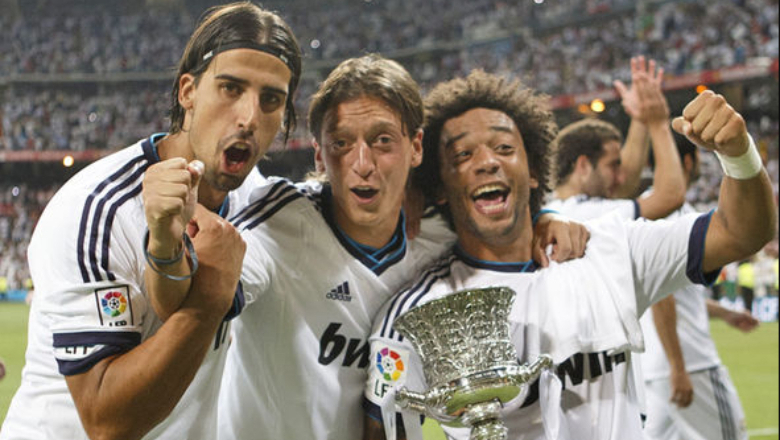
Real Madrid: control in a system of intensity
The 2011/12 La Liga season stands as one of the most competitive title races in Spanish football history. Within a team built for direct attacking play, Ozil provided balance.
Operating behind the forwards, he consistently created opportunities through precise passing and awareness of movement. His assists played a crucial role in breaking down defensive lines, allowing Real Madrid to maintain attacking efficiency throughout the season.
That campaign ended with a league title, but more importantly, it showed how Ozil could adapt his style to fit a system built on speed and transition.
Arsenal: moments that defined finals
In England, Ozil’s contribution often became most visible in cup competitions. Across four FA Cup victories, his presence in decisive matches remained consistent.
In the 2014 final against Hull City, Arsenal found themselves under pressure early. As the match progressed, Ozil’s composure helped stabilize possession and create attacking opportunities. His movement between lines allowed Arsenal to regain control and eventually turn the game around.
Similar patterns appeared in later finals. He did not dominate physically, but his positioning and passing ensured that Arsenal could build attacks with structure, even under pressure.

Werder Bremen: early signs of control
Before moving to Spain, Ozil’s development at Werder Bremen included a key domestic trophy. Winning the DFB-Pokal in the 2008/09 season, he began to show the qualities that would define his career.
Operating in advanced midfield positions, he demonstrated the ability to influence games through passing rather than physical presence. That early success set the foundation for his move to a higher level.

Germany: the stage where everything aligned
The 2014 FIFA World Cup represents the most significant achievement of Ozil’s career. Within a German team built on structure and efficiency, he played a key role in linking midfield and attack.
Throughout the tournament, his movement created space for teammates, while his passing ensured continuity in possession. Matches were often controlled through short, precise combinations, and Ozil was central to that approach.
The final against Argentina followed a similar pattern. Germany maintained structure and patience until the decisive moment arrived, securing the title and completing one of the most dominant international campaigns of that era.
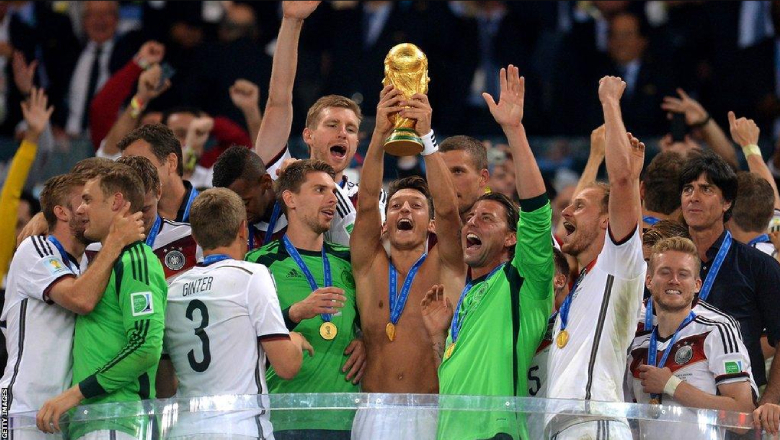
Mesut Ozil total trophies over the career:
10 titles, including:
Werder Bremen: 1 title (DFB-Pokal: 2008/09)
Real Madrid: 3 titles (La Liga: 2011/12; Copa del Rey: 2010/11; Supercopa de España: 2012)
Arsenal: 5 titles (FA Cup: 2013/14, 2014/15, 2016/17, 2019/20; FA Community Shield: 2015)
Germany national team: 1 title (FIFA World Cup: 2014)
Looking at how many trophies does Ozil have, the amount of 10 reflects a career shaped by influence rather than accumulation. His titles are tied to systems, to structure, and to moments where control becomes the deciding factor.
In the context of updating news, his legacy continues to be discussed through the lens of intelligence and vision. Not every impact is loud, and not every contribution appears in statistics, but in Ozil’s case, the effect on the game remains clear.
For fans who want to stay updated with updating news, explore football predictions, and follow football results across every major competition, visit livesports088.mobi to experience a complete football platform built for real-time insights and global coverage.
The Most Popular
-
 How many rounds are there in the Premier League? The structural evolution of world's most attractive football domestic league
 -
 Mexico national soccer team jersey history: Where Aztec spirit meets football identity
 -
 5 Germany biggest defeats in football history: The heaviest defeat record has lasted for more than a century
 -
 Which is the best Real Madrid home jerseys of all time? Ranking ten best 'Madrid Royal' shirts of Los Blancos
 -
 Top 10 players who played for both Arsenal and Barcelona: No.1 joined the opposite to win the Champions League
 -
 The tactical evolution of a legend: What position does Ronaldo play?
 -
 Uruguay national football team players at World Cup 2026: Five key factors set to drive South American teams further
 -
 Why did Beckham leave Real Madrid? From Los Blancos farewell to a groundbreaking move in the US
 -
 How much did Bayern Munich pay for Lewandowski? Among one of the most successful transfers in the 2010s
 -
 How much did Liverpool pay for Alisson? Key signing that erased the European final goalkeeping nightmare