
Ranking 10 biggest football stadium in Europe: Which country has the most spots?
In European football, stadiums are far more than structures built from steel and concrete. They are places where decades of triumph, heartbreak, and unforgettable moments unfold in front of massive crowds. The size of a stadium often reflects the scale of a club’s history, its fan base, and its place in football culture.
Some venues hold over 80,000 supporters, turning every major match into a thunderous spectacle. Others carry legendary reputations because of the iconic games played there. From historic arenas built nearly a century ago to futuristic venues redesigned for modern football, Europe’s largest stadiums represent the grand stage of the sport.
Below is a countdown by Livesports088, about the ten largest football stadiums in Europe, where enormous capacity meets history, architecture, and unforgettable matchday atmospheres.
10 Largest Football Stadiums in Europe (2026)
10. Allianz Arena (Capacity: 75,024)
Opened in 2005, Allianz Arena quickly became one of the most recognizable stadiums in the world thanks to its glowing exterior panels that can illuminate in different colors. The futuristic design by Herzog & de Meuron transformed Munich’s football landscape.
Beyond aesthetics, the stadium is known for its intense matchday environment. The steep stands keep fans close to the pitch, amplifying the noise during crucial Bundesliga and Champions League fixtures. Allianz Arena also hosted several matches during the 2006 World Cup and remains one of Europe’s most technologically advanced stadiums.
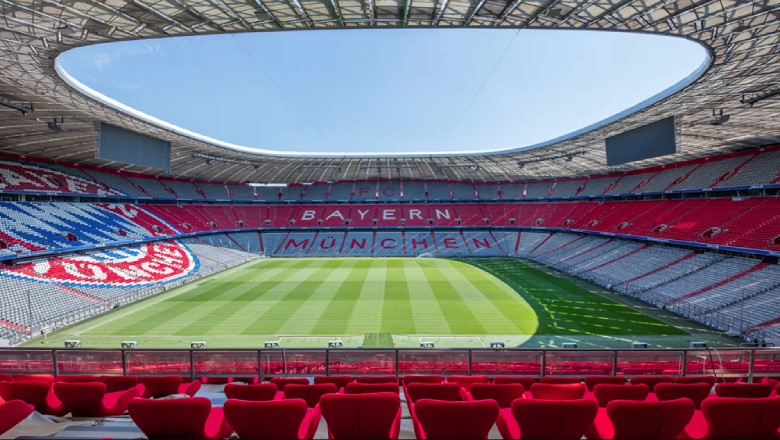
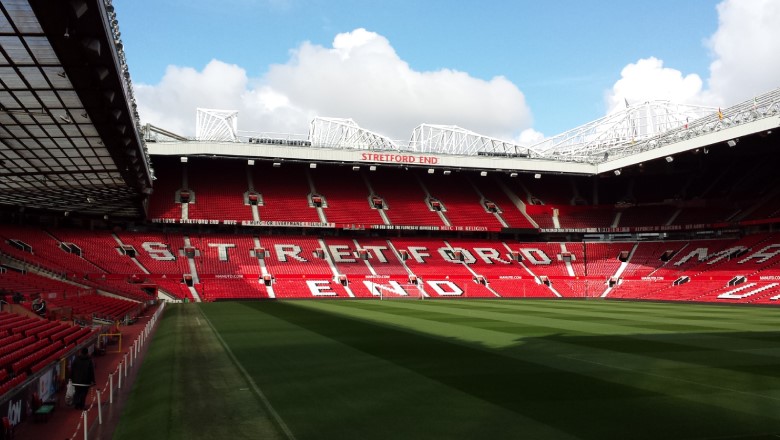
9. Old Trafford (Capacity: 74,310)
Few stadiums in world football carry the aura of Old Trafford. Built in 1910, it has long been associated with some of the most dramatic chapters in English football history.
Often called the “Theatre of Dreams,” the stadium became synonymous with Manchester United’s golden era under Sir Alex Ferguson. Legendary comebacks, title celebrations, and iconic European nights have turned Old Trafford into one of the sport’s most historic venues. Despite being over a century old, it remains among the largest club stadiums in Europe.
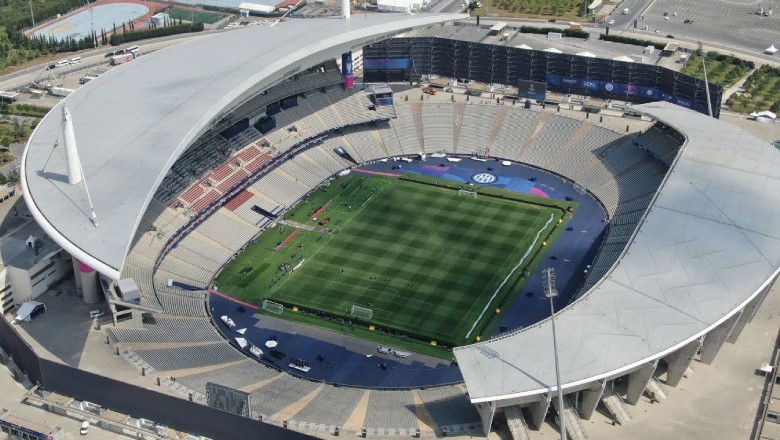
8. Ataturk Olympic Stadium (Capacity: 76,092)
Located on the outskirts of Istanbul, Ataturk Olympic Stadium became globally famous after hosting one of football’s greatest matches. The 2005 Champions League final between Liverpool and AC Milan produced an unforgettable comeback that still defines the stadium’s legacy.
Built to accommodate massive sporting events, the venue features a wide layout typical of Olympic stadiums. Its vast scale allows it to host international finals, national team matches, and major tournaments with ease.
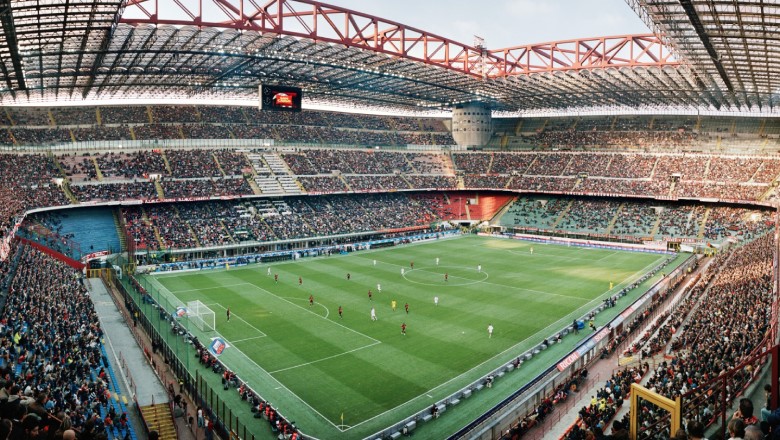
7. San Siro (Capacity: 80,018)
Being the home stadium of AC Milan and Inter Milan, San Siro stands as one of the most iconic football cathedrals in Europe. Originally opened in 1926, the stadium is instantly recognizable thanks to its towering spiral ramps and imposing structure. In 1980, the official stadium name was changed to Giuseppe Meazza, in honor of an Italian legend who played for both Inter and AC Milan.
What makes San Siro unique is that it has served as the home ground for two rival giants for decades. The fierce derby atmosphere inside the stadium has produced some of the most electric nights in Italian football history. Even after nearly a century, the venue still represents the soul of Milanese football culture.
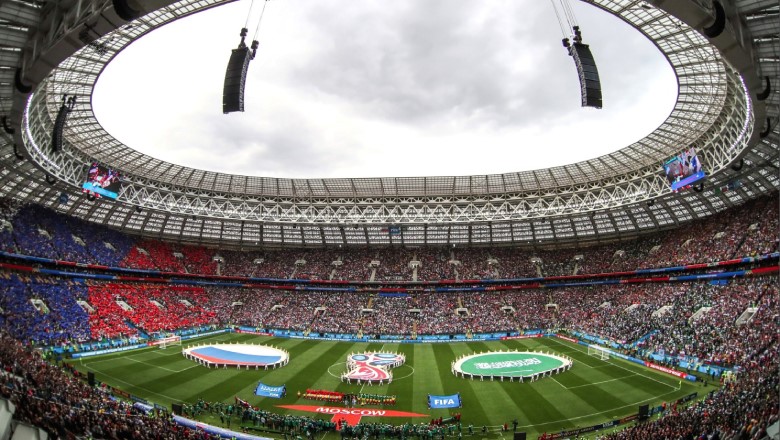
6. Luzhniki Stadium (Capacity: 81,000)
Luzhniki Stadium is the largest sports arena in Russia and one of the most historically significant venues in Eastern Europe. Since opening in 1956, it has hosted numerous international competitions and historic football matches.
Its global recognition reached new heights during the 2018 World Cup when it staged the final between France and Croatia. The stadium’s enormous scale and central location in Moscow make it the centerpiece of Russian football events.
5. Stade de France (Capacity: 81,338)
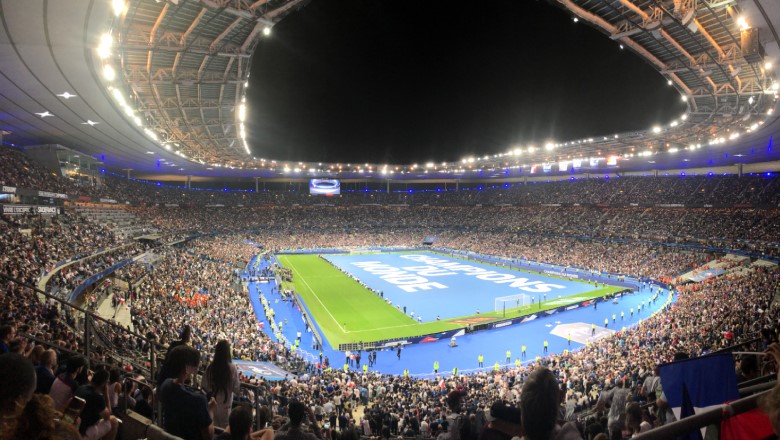
Constructed for the 1998 World Cup, Stade de France quickly became the beating heart of French football. The stadium hosted the historic final where France defeated Brazil to claim its first world title.
Located in Saint Denis near Paris, the venue has since welcomed Champions League finals, international tournaments, and countless national team matches. Its design emphasizes both capacity and visibility, ensuring that even the highest seats offer a clear view of the pitch.
4. Signal Iduna Park (Capacity: 81,365)
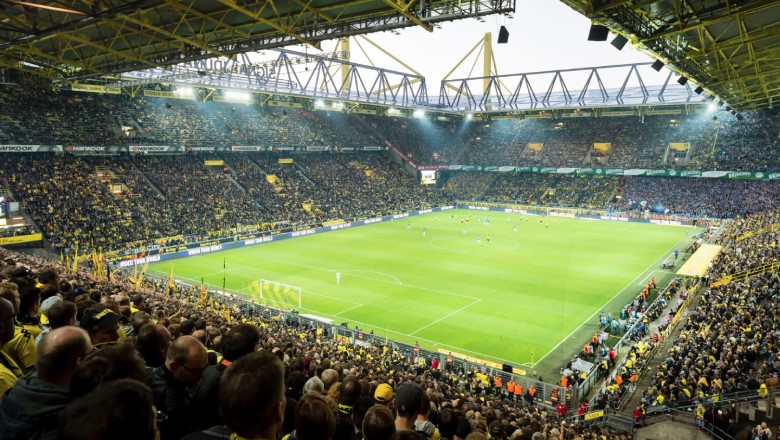
Few stadiums generate an atmosphere quite like Signal Iduna Park. The venue is famous for its immense southern stand known as the “Yellow Wall,” where tens of thousands of fans stand shoulder to shoulder during matches.
This massive terrace creates one of the most intimidating environments in world football. When Borussia Dortmund play under the floodlights, the sound and visual spectacle inside the stadium can feel overwhelming for visiting teams.
3. Estadio Bernabeu (Capacity: 83,186)
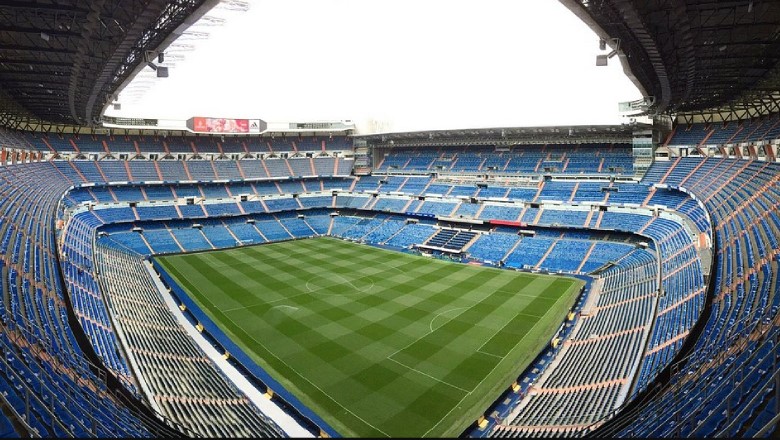
Santiago Bernabeu was renamed shortly to Bernabeu last year. For decades, it has been the stage for some of the greatest moments in club football history. As the home of Real Madrid, the stadium has witnessed countless Champions League triumphs and legendary performances.
A major renovation project recently transformed the arena into a modern architectural masterpiece. With a retractable roof, advanced technology, and redesigned interiors, the Bernabeu blends historic prestige with cutting edge innovation.
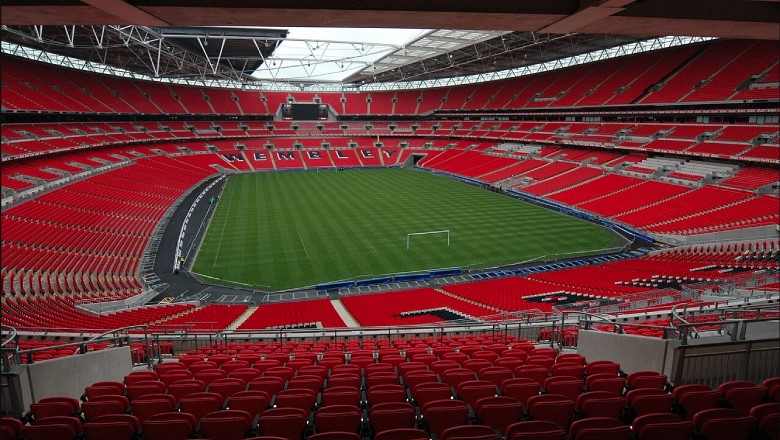
2. Wembley Stadium (Capacity: 90,000)
Wembley is more than just a football stadium. It represents the national heart of the sport in England. The modern version, opened in 2007, replaced the original iconic venue while maintaining its legendary status.
Its massive arch dominates the London skyline and has become a global symbol of football. The stadium hosts major domestic finals every season and frequently welcomes European and international showpiece matches.
1. Camp Nou (Capacity: 105,000)
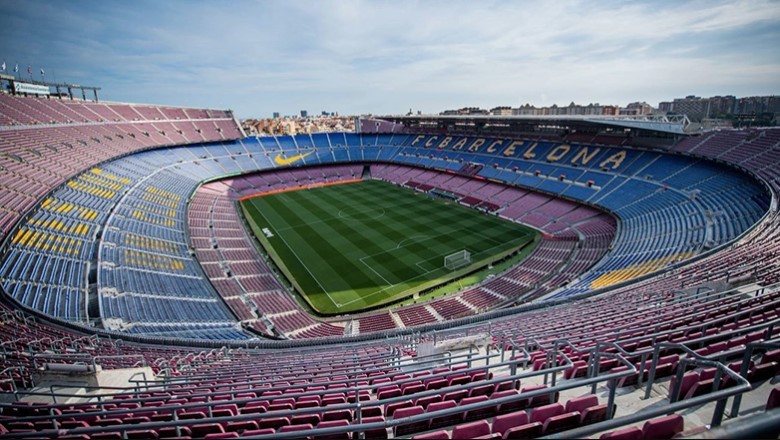
Camp Nou is the largest football stadium in Europe and one of the most famous arenas in the world. Since opening in 1957, it has served as the grand stage for Barcelona’s football identity.
Over the decades, the stadium has witnessed countless historic performances and unforgettable Champions League nights. With the expectation of 105,000 seats after completing the renovation, the scale of Camp Nou creates a breathtaking spectacle when the stands are full and the crowd erupts in unison.
Top 10 Largest Stadiums in Europe
1. Camp Nou (Capacity: 105,000)
2. Wembley Stadium (Capacity: 90,000)
3. Santiago Bernabeu (Capacity: 83,186)
4. Signal Iduna Park (Capacity: 81,365)
5. Stade de France (Capacity: 81,338)
6. Luzhniki Stadium (Capacity: 81,000)
7. San Siro (Capacity: 80,018)
8. Ataturk Olympic Stadium (Capacity: 76,092)
9. Old Trafford (Capacity: 74,310)
10. Allianz Arena (Capacity: 75,024)
Europe’s largest stadiums reveal how football can grow far beyond the boundaries of the pitch. Their enormous stands amplify every chant, every goal, and every dramatic moment until the experience becomes something truly unforgettable.
Generations of supporters have filled these arenas with passion, transforming them into living monuments of the sport. Long after the final whistle, the echoes of those matches remain part of football’s enduring history.
Some football stories are told through trophies. Others are hidden inside stadium walls, waiting to be rediscovered. If you enjoy uncovering the numbers, records, updating news, and lesser known narratives that shape the global game, explore more deep football insights and rankings at Livesports088.mobi, where every statistic leads to a bigger story.
The Most Popular
-
 How many rounds are there in the Premier League? The structural evolution of world's most attractive football domestic league
 -
 Mexico national soccer team jersey history: Where Aztec spirit meets football identity
 -
 5 Germany biggest defeats in football history: The heaviest defeat record has lasted for more than a century
 -
 Which is the best Real Madrid home jerseys of all time? Ranking ten best 'Madrid Royal' shirts of Los Blancos
 -
 Top 10 players who played for both Arsenal and Barcelona: No.1 joined the opposite to win the Champions League
 -
 The tactical evolution of a legend: What position does Ronaldo play?
 -
 Uruguay national football team players at World Cup 2026: Five key factors set to drive South American teams further
 -
 Why did Beckham leave Real Madrid? From Los Blancos farewell to a groundbreaking move in the US
 -
 How much did Bayern Munich pay for Lewandowski? Among one of the most successful transfers in the 2010s
 -
 How much did Liverpool pay for Alisson? Key signing that erased the European final goalkeeping nightmare