
Top 5 Chinese owned football clubs in Europe: A big continental derby with the top two teams
The narrative of Chinese owned football clubs in Europe serves as a fascinating case study in how geopolitical shifts and domestic economic policies can directly dictate the fate of historic sporting institutions. During the mid-2010s, a surge of investment from Beijing-based conglomerates sought to buy influence and expertise within the Premier League and Serie A, but the reality of 2026 reflects a more cautious and fragmented landscape.
According to the strategic insights on Livesports088, while some clubs have thrived under stable long-term visions, others were pushed to the brink of insolvency as credit lines from the East were abruptly severed. This era of "soft power" through sport has largely transitioned into one of consolidation or total exit, leaving a legacy of both rescued legacies and cautionary financial tales across the continent's most prestigious footballing leagues.
5 Chinese owned football clubs in Europe
5. Wolverhampton Wanderers (2016 - present)
Wolverhampton Wanderers represents the most enduring and strategically sound example of Chinese investment within the competitive arena of the Premier League. Acquired by the Fosun International conglomerate in 2016 for approximately £45 million, the club underwent a massive transformation from a Championship side into a consistent European contender at Molineux. Fosun’s long-term vision was uniquely supported by a partnership with super-agent Jorge Mendes, facilitating the arrival of elite Portuguese talent that elevated the club's technical standards.
Unlike many of their counterparts who faced liquidity crises, Fosun has maintained a balanced financial model, continuing to invest in both the first-team squad and world-class training infrastructure. However, in the current season, Wolves are at serious risk of relegation, and the Chinese owners have left open the possibility of leaving the club in the future.

4. Aston Villa (2016 - 2019)
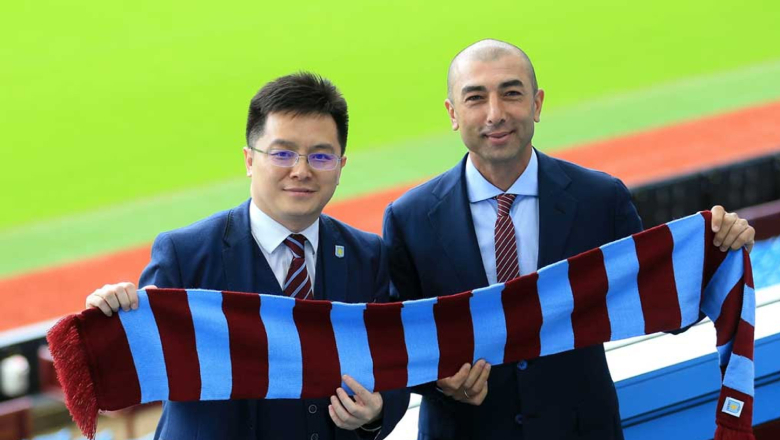
The ownership of Dr. Tony Xia and his Recon Group at Aston Villa remains a stark reminder of how quickly ambitious projects can unravel under financial pressure. Xia purchased the club for £76 million in 2016, promising to turn the Villans into a global top-three brand within a decade. However, after failing to secure promotion in the 2018 play-off final, the club's "boom or bust" strategy led to a severe cash-flow crisis and a significant unpaid tax bill of £4 million.
Xia was eventually forced into a distressed sale to Nassef Sawiris and Wes Edens in 2019, primarily because the Chinese government’s crackdown on "irrational" overseas sports spending left him unable to move necessary capital out of China. This forced exit underscored the vulnerability of European clubs when their owners’ domestic economies become heavily regulated, leading to a complete change in leadership to save the historic Birmingham institution from administration.
3. Atletico Madrid (2015 - 2018)
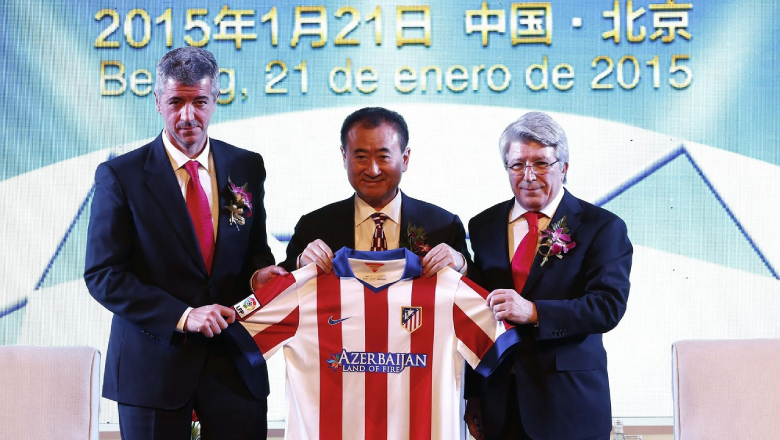
The Wanda Group, led by billionaire Wang Jianlin, made a historic entry into La Liga in 2015 by acquiring a 20% stake in Atletico Madrid for €45 million. This partnership was intended to bridge the gap between Spanish football and the Chinese market, while also funding the development of the club's state-of-the-art Wanda Metropolitano stadium. However, by early 2018, the Wanda Group abruptly divested its entire stake to the Quantum Pacific Group. This exit was a strategic necessity driven by Beijing’s mandate for large conglomerates to reduce their debt levels and refocus on domestic industries.
Although the club retained the "Wanda" name for its stadium for a period, the ownership transition marked the end of an ambitious era of Eastern influence in Madrid. The sale was a direct result of shifting geopolitical priorities that prioritized internal economic stability over the prestigious but high-risk venture of owning elite European sporting assets.
2. AC Milan (2017 - 2018)
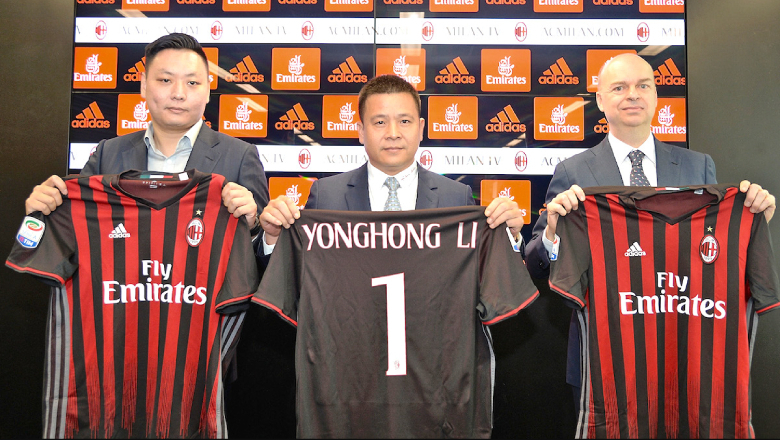
The short and turbulent tenure of Li Yonghong at AC Milan remains one of the most controversial chapters in the history of Italian football ownership. Li purchased the club from Silvio Berlusconi for €740 million in 2017, a deal that was heavily leveraged with high-interest loans from the Elliott Management hedge fund. Despite a frantic €200 million spending spree on new signings, Li’s lack of transparent wealth and the subsequent failure to meet a €32 million debt repayment deadline led to disaster.
By July 2018, Elliott Management officially seized the club after Li defaulted on his obligations, effectively ending his one-year reign. The failure was largely attributed to the Chinese government’s refusal to approve further capital outflows, which left Li isolated and unable to sustain the massive operational costs of a European giant. This collapse serves as the ultimate cautionary tale regarding non-institutional ownership backed by volatile or unverified international credit lines.
1. Inter Milan (2016 - 2024)
Suning’s ownership of Inter Milan was arguably the most successful Chinese venture in terms of silverware, delivering two Serie A titles and a Champions League final appearance. However, even this trophy-laden era ended in a high-profile debt default in May 2024. The Suning Holdings Group, led by Steven Zhang, lost control of the club to Oaktree Capital after failing to repay a massive three-year loan totaling €395 million.
The primary cause of this exit was the severe financial strain placed on Suning's domestic retail operations in China, combined with the state’s restrictive policies on capital flight. Despite Zhang’s public efforts to refinance the debt, the inability to move money out of China meant that Inter Milan was handed over to institutional lenders. This landmark transition ended an eight-year tenure, highlighting that even the most successful on-field projects can be completely dismantled by the financial volatility and shifting regulatory environments of their overseas owners.

5 Chinese owned football clubs in Europe:
1. Inter Milan (2016 - 2024)
2. AC Milan (2017 - 2018)
3. Atletico Madrid (2015 - 2018)
4. Aston Villa (2016 - 2019)
5. Wolverhampton Wanderers (2016 - present)
The rise and subsequent retreat of Eastern investment have left a permanent mark on the structural evolution of the modern game. Analyzing the impact of Chinese owned football clubs in Europe provides a profound perspective on how the pursuit of global influence through sport is often at the mercy of domestic regulatory shifts and macroeconomic stability. While the stable and integrated model of Fosun at Wolves offers a blueprint for success, the forced exits at Milan and Inter highlight the inherent risks of high-leverage ownership models tied to volatile foreign markets.
As we move deeper into the 2025/26 season, the legacy of these owners remains visible in the squads and stadiums they helped fund, even as the controlling stakes have moved toward institutional or local hands. These transitions underscore that in the elite echelons of football, financial transparency and geopolitical alignment are now just as critical as tactical ingenuity on the pitch.
Tracking the upcoming schedules of these clubs is essential for understanding how they have adapted under their new administrative and financial regimes. For the most reliable match data and professional insights, visit livesports088.mobi today to stay informed about every development in the world of football.
The Most Popular
-
 How many rounds are there in the Premier League? The structural evolution of world's most attractive football domestic league
 -
 Mexico national soccer team jersey history: Where Aztec spirit meets football identity
 -
 5 Germany biggest defeats in football history: The heaviest defeat record has lasted for more than a century
 -
 Which is the best Real Madrid home jerseys of all time? Ranking ten best 'Madrid Royal' shirts of Los Blancos
 -
 Top 10 players who played for both Arsenal and Barcelona: No.1 joined the opposite to win the Champions League
 -
 The tactical evolution of a legend: What position does Ronaldo play?
 -
 Uruguay national football team players at World Cup 2026: Five key factors set to drive South American teams further
 -
 Why did Beckham leave Real Madrid? From Los Blancos farewell to a groundbreaking move in the US
 -
 How much did Bayern Munich pay for Lewandowski? Among one of the most successful transfers in the 2010s
 -
 How much did Liverpool pay for Alisson? Key signing that erased the European final goalkeeping nightmare